Today's Highlights















Top Stories
Posts:—Clusters:—Next Crawl:—









































20
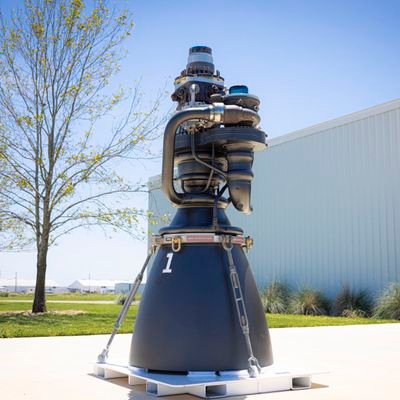
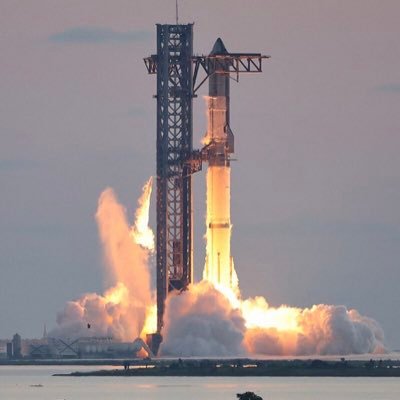
SpaceX begins public trading on Nasdaq under ticker $SPCX with Musk delivering opening speech at Marketsite
15h#1VIEWS23.3M#1LIKED178.8k#1BOOKMARKED11.2k#1COMMENTS11k


















Watchlist
Video Signals

US Government Blocks Anthropic Fable 5 and Mythos 5 Access Worldwide
2h agoViews 70KLikes 740Bookmarks 194

iOS 27 Adds Extend Feature To Expand Any Photo Edge By 25%
11h agoViews 1.5MLikes 15KBookmarks 1.9K


Fable AI Generates Full Hogwarts Castle Model In One Shot
7h agoViews 256KLikes 1.1KBookmarks 381
Apple Insists Upgraded Siri Is Not Powered by Gemini
13h agoViews 338KLikes 2.6KBookmarks 358


Figure F.03 Humanoid Robot Walks Stairs Repeatedly In Two-Hour Test
9h agoViews 108KLikes 1.4KBookmarks 176

Claude Code Builds Sophisticated SimRefinery Prototype From Screenshots
7h agoViews 94KLikes 514Bookmarks 275
Theo Shares Tokemaxxing Video To Maximize Mythos In Claude Subs
7h agoViews 91KLikes 311Bookmarks 184

Houdini Powers Massive Procedural City Simulation For AI Training
12h agoViews 350KLikes 514Bookmarks 335

Richard Sutton Argues Trial-And-Error Drives Learning Over Imitation
12h agoViews 39KLikes 208Bookmarks 140

OpenAI Releases Real-Time Speech Translation API
3h agoViews 345KLikes 0Bookmarks 0















New github stars (48hrs)



60
Shopify CEO Tobi Lütke and Austen Allred criticize Canadian newspaper for publishing reasons to dislike Elon Musk
20h1.1M26k921
MOST NEGATIVE103




































2017
US government orders Anthropic to suspend its Fable 5 and Mythos 5 models over national security concerns
1h159k1.5k212
FASTEST CLIMBING+17




Recent Stars
- lixilinx/psgd_torch56M AGOImplements preconditioned stochastic gradient descent with Kronecker, affine and low-rank preconditioners in PyTorch.198 stars
- maddada/Ghostex5H AGOManages native Ghostty-based agent CLI sessions on macOS with persistent terminals, GUI panes, embedded browser, code editor, and mobile access.369 stars
- 1 stars
- zlab-princeton/i16H AGOReleases code for training a 3B-parameter text-to-image diffusion model competitive at 1024 resolution.80 stars
- Andy-Cheng/Flex4DHuman7H AGOGenerates synchronized dense multi-view videos from monocular or sparse inputs via multi-view video diffusion for 4D human reconstruction.9 stars