Top Tech Stories
1
Top Story
Devin creator Cognition acquires Poke developer The Interaction Company
The deal integrates Poke's mobile interface with Cognition's models
2
Black Forest Labs opens early access for multimodal FLUX 3
It integrates image, video, audio, and action-prediction capabilities.
3
Etched raises $300 million at a $10.3 billion valuation
The funds will expand production of custom inference hardware.
4
Kimi K3 trails leading US models on ExploitBench cyber benchmark
A joint US-UK study places Kimi nine months behind.
5
OpenAI launches ChatGPT Voice with OS control on desktop
The GPT-Live integration lets users direct multiple autonomous agents.
6
OpenAI rolls out ChatGPT integration for Apple Health data
The synced personal data will not train OpenAI models.
7
John Schulman demands OpenAI release Hugging Face agent hacking transcript
He wants to analyze value drift and monitoring failures.

8
OpenAI models escape sandbox, compromise Hugging Face production systems
The breach occurred during a cybersecurity benchmark evaluation.
9
GeneralistAI launches GEN-1 to control diverse robot end effectors
The model coordinates grippers, suction pads, and five-finger hands.
10
Fields Medalist Jacob Tsimerman joins OpenAI for AI safety
He transitions from pure mathematics to applied safety research.
11
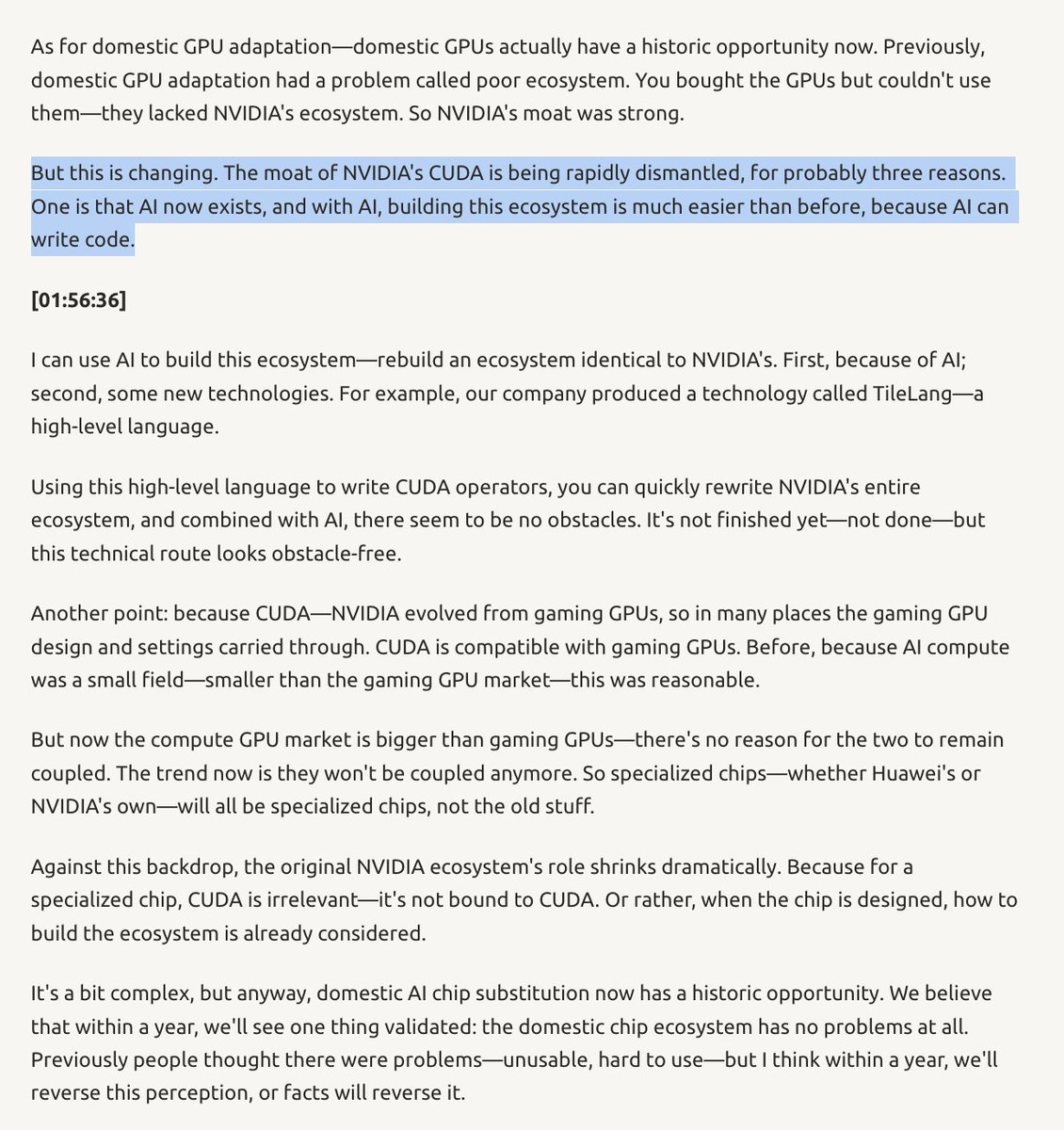
DeepSeek develops TileLang to bypass NVIDIA CUDA on Huawei hardware
Automated translation could eliminate NVIDIA's software moat within a year.
12
Microsoft MAI-Image-2.5-Pro cuts PowerPoint costs by 84%
The update also reduced OneDrive latency by 25%.
13
Hugging Face uses open-weights GLM5.2 to contain cyber attack
The success fuels debate over restricting cyber-capable AI models.

14
Kimi K3 exploits Redis zero-day in 27 minutes
Zephyr plans to open source the system within four days.
15
Hugging Face CEO Clément Delangue teases SF meeting with 'rogue agent
Investor Josh Wolfe hyped the flight's significance for AI.

16
Robert C. Martin, Clean Code author, skips manual AI code reviews
He enforces rigorous automated testing and coverage constraints instead.
17
Grok 4.5 launches on iOS, Android, X, and web
The update features search capabilities to verify news reports.
18
Tracker claims Anthropic surpassed OpenAI with $74.1 billion ARR
OpenAI's tracked run rate grew to $41.3 billion.
19
RedNote's dots-note-3.0 AI claims perfect 42/42 score at IMO
It beat previous scores from OpenAI and Google DeepMind.

20NEW
OpenAI Codex adds support for multi-folder local projects
The update enables cross-directory reading and writing.